
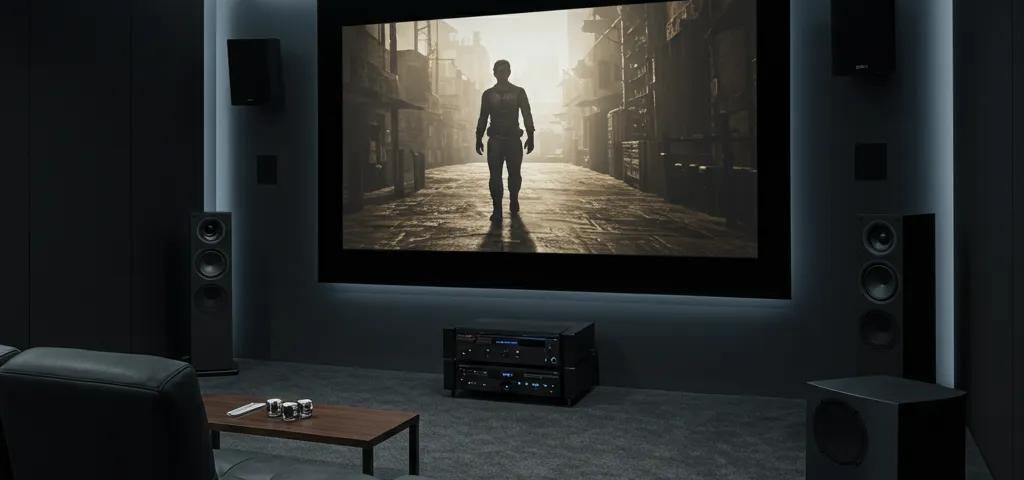

Dolby Atmos vs Traditional Surround Sound: The Ultimate Guide to Choosing the Best Immersive Audio System
Dolby Atmos and traditional surround sound represent two different approaches to delivering immersive audio: channel-based systems map discrete channels to fixed speaker locations, while Atmos uses object-based audio and height channels to place sounds in three-dimensional space.The article also includes compact comparison tables, speaker-layout lists, and clear checklists for choosing equipment and installers. Where professional installation helps, we note how local integrators in Houston support residential and commercial deployments, and we provide actionable steps you can use to plan an upgrade or new installation.
What Is Traditional Surround Sound? Understanding 5.1 and 7.1 Channel-Based Audio
Traditional surround sound is a channel-based audio model that assigns discrete audio channels to specific speakers, producing a horizontal soundstage around you for cinematic and music playback. The mechanism relies on a fixed mix encoded into separate tracks—front left/right, center, surround left/right, and a subwoofer in 5.1—so each speaker reproduces the content intended for its channel. The practical benefit is consistent playback on standard gear and broad content compatibility, making 5.1 and 7.1 common defaults for movies and legacy media. Understanding this framework clarifies why traditional systems prioritize speaker placement and AVR channel handling rather than object metadata or height rendering.
How Does Traditional Surround Sound Work?
Traditional surround sound works by decoding discrete channel tracks in the source material and routing them to specific speakers through an AV receiver, creating a mapped soundfield across your listening plane. The AV receiver performs channel decoding, amplification, and basic room correction; it treats each channel as a fixed location in the mix. This model is simple to explain: source → AVR → amplifier channels → speakers, making troubleshooting and upgrades predictable. This predictability supports broad content compatibility and straightforward retrofits in many rooms, setting up our next discussion on common speaker configurations.
What Are the Common Traditional Surround Sound Configurations?

Common channel-based configurations include 5.1 and 7.1 systems, which differ in the number and placement of surround speakers to cover larger rooms or provide greater lateral imaging.
- A 5.1 setup has five main channels (front L/R, center, surround L/R) plus one subwoofer, suitable for small to medium home theaters.
- A 7.1 system adds two rear surrounds for improved localization in larger rooms and medium-sized auditoria.
These configurations fit many living rooms and legacy media sources, and they provide a baseline when comparing how Atmos adds vertical dimension.
What Are the Benefits and Limitations of Traditional Surround Sound?
Traditional surround sound offers reliable playback, broad content compatibility, and relatively lower installation complexity, making it a cost-effective solution for many homeowners and venues. Benefits include easy sourcing of hardware, predictable speaker placement, and strong support for legacy Blu-ray and broadcast formats. Limitations surface when immersive, overhead effects are desired: channel-based systems lack native height rendering and cannot dynamically place sound objects above the listener. Those limits drive the adoption of object-based approaches like Dolby Atmos, which we explore next.
What Is Dolby Atmos? Exploring Object-Based Audio and Height Channels
Dolby Atmos uses object-based audio and metadata rendering to position sounds as discrete “objects” anywhere in a three-dimensional soundfield, including overhead, which delivers a more convincing sense of spatial realism. The mechanism embeds metadata with each audio object that describes its position and movement; the renderer in compatible AV receivers maps those objects to the installed speaker topology in real time. This approach yields precise overhead cues, scalable speaker counts, and more lifelike localization compared with fixed-channel mixes. Understanding Atmos metadata and height channels clarifies why many modern films, games, and streaming titles are authored for Atmos to provide immersive overhead effects.
How Does Dolby Atmos Create a 3D Immersive Sound Experience?

Dolby Atmos creates 3D sound by authoring audio as objects with positional metadata that tells the renderer where to place a sound in space relative to you. During playback, the AV processor interprets the metadata and distributes the audio to available speakers—including height speakers or up-firing modules—so a sound like a helicopter can be rendered to move overhead smoothly. This rendering makes Atmos especially effective for motion and environmental cues in films and games. The object model also allows content creators to mix with precise positions rather than fixed channels, improving consistency across different room configurations.
Dolby Atmos: From Surround Sound to Object-Based Mixing
After a brief introduction to digital cinema the progression from Dolby Surround 7.1 to Dolby Atmos, including height speakers, is explained. Details of cinema theatre speaker placement and orientation for the purpose of improved audio quality and timbre matching are unveiled. The concept of object-based mixing and metadata is explained, as well as the typical workflow, which includes dialogue, Foley, SFX and music mixing into traditional ‘beds’ (stems) and ‘objects’ content and conversion into the final Dolby Atmos or 5.1/7.1 mix. The basics of Dolby’s RMU (Rendering and Mastering Unit) are explained, as well as the DCP (Digital Cinema Package). The core functionalities of the Dolby Atmos Monitor and Dolby Atmos Panner software-plugins are introduced briefly. Practical applications within AVID mixing consoles and Pro-Tools Systems are touched as well as upmixing tools from third-party developers. The chapter concludes with case-study experiences gained in using Dolby Atmos for pop music live sound reinforcement, as well as an in-detail practical description of necessary steps and options for music production in Dolby Atmos.
The technical underpinnings of object-based audio, including metadata and its role in rendering, are crucial for understanding how Dolby Atmos achieves its immersive soundscapes.
What Are the Typical Dolby Atmos Speaker Setups?
Typical Atmos topologies are denoted with channel counts like 5.1.2 or 7.1.4, where the final digit indicates height channels; for example, 5.1.2 adds two height speakers to a 5.1 base. Common configurations:
- 5.1.2 — Front L/R, center, surrounds, subwoofer, plus two height speakers for small-to-medium rooms.
- 5.1.4 — Same as above with four height channels for stronger vertical imaging in medium rooms.
- 7.1.4 — Adds two additional surrounds for large rooms and four height channels for full 3D immersion.
Choices between in-ceiling vs up-firing speakers influence performance, retrofit ease, and aesthetic impact, and these trade-offs guide speaker selection for a given room.
What Are the Advantages of Dolby Atmos Over Traditional Systems?
Dolby Atmos delivers improved immersion through overhead localization, dynamic object movement, and adaptive rendering that scales to speaker arrays, delivering a more lifelike listening experience. Advantages include better vertical imaging, enhanced spatial cues for gaming and VR, and greater creative freedom for content producers who mix in 3D. Atmos can often be retrofitted into existing systems via up-firing modules if in-ceiling work is impractical, although in-ceiling speakers typically yield cleaner overhead imaging. These benefits explain why many enthusiasts and commercial venues choose to invest in Atmos-capable hardware.
Dolby Atmos: Technical Characteristics of Immersive Cinema Sound
Under this premise, this article aims to explore the technical characteristics of Dolby Atmos, an object-based sound system that has consolidated its position as the leading solution for the production and delivery of immersive cinematic sound. The potential and challenges that this platform presents will be analysed here considering the opinions of several sound professionals, which shall give us clues regarding a better utilization of Dolby’s most advanced so
The technical characteristics of Dolby Atmos, particularly its object-based nature, are key to its advanced immersive sound capabilities in cinema.
What Are the Key Differences Between Dolby Atmos and Traditional Surround Sound?
At a technical level, the primary difference is processing model: Atmos uses object-based rendering, while traditional systems use fixed channel mixes, and that distinction drives differences in speaker flexibility, immersion, and authoring workflows. Practically, Atmos enables height channels and dynamic positioning that traditional 5.1/7.1 cannot replicate without additional speakers, which impacts perceived realism for certain content types. Content availability is expanding for Atmos across streaming, Blu-ray, and games, but legacy media remains abundant in channel-based formats. Cost and installation complexity also diverge: Atmos typically adds height-speaker installation and calibration needs, increasing labor and equipment costs versus conventional setups.
Understanding Audio Representations: Channel-Based vs. Object-Based
Currently, there are three mainstream audio representations, namely channel-based audio, object-based audio, and scene-based audio. The features of content expression differ among these audio representations, the details of which have been specified in the International Telecommunication Union: Radiocommunication Sector (ITU-R) Recommendations. The effective use of these audio representations in accordance with what is to be expressed in the content requires a deep understanding of the technical specifications and capabilities of the audio representations. This review first traces the evolution of loudspeaker layouts developed in recent years, i.e., a history of multichannelization, which is indispensable for the understanding of audio representations. Then, the position of each audio representation among various audio-related standards is described and the method of adopting and implementing each audio representation in other audio-related standards is reviewed using the Moving Pict
Understanding the fundamental differences between channel-based and object-based audio representations is essential for appreciating the technical advancements offered by systems like Dolby Atmos.
This table clarifies why choice depends on content priorities, room, and budget. The next subsections compare immersion, speaker flexibility, content, and cost in practical terms.
How Do Immersion and Realism Compare Between the Two Systems?
Immersion differs markedly: Atmos can place sound overhead and move objects smoothly in three dimensions, which increases realism for environmental and directional cues. Traditional surround excels at creating a stable horizontal soundstage that accurately positions sounds along the listening plane, producing strong dialogue anchoring and lateral effects. For cinematic scenes with vertical motion or enveloping ambience, Atmos provides a perceptual advantage; for straightforward dialogue-focused playback, a well-calibrated 5.1 system remains compelling. These perceptual differences help you determine whether the added complexity of Atmos is worthwhile for your needs.
How Does Speaker Configuration and Flexibility Differ?
Speaker flexibility is a key differentiator: Atmos renders objects to whatever speaker set is available, so your system can vary from minimal up-firing arrays to full in-ceiling deployments, while channel-based setups require specific speaker counts and placements. Atmos’ scalability allows incremental upgrades—adding height speakers later—whereas traditional systems are constrained by fixed channel count unless reconfigured. Retrofitting choices (up-firing vs in-ceiling) depend on ceiling height, room shape, and aesthetic preferences. Understanding these options helps you plan installations that balance performance with practicality.
What Is the Content Availability and Compatibility for Each System?
Content availability for Atmos is growing across streaming platforms, Blu-ray releases, and modern game engines, while traditional 5.1/7.1 content remains the most ubiquitous legacy format. Many streaming titles now include Atmos mixes, and gaming consoles increasingly support object-based audio, expanding use cases beyond movies. Legacy material will still play perfectly on Atmos-capable receivers by downmixing to channel outputs, ensuring compatibility. This trend means if you’re focused on future-proofing, you’ll want to weigh ongoing content support when choosing systems.
How Do Cost and Installation Complexity Compare?
Costs diverge because Atmos often requires additional speakers, wiring, and more sophisticated calibration, which increases equipment and labor expenses compared with baseline 5.1 installs. Installation complexity rises when in-ceiling speakers are specified—ceiling work, code compliance, and precise placement matter—while up-firing modules reduce drywall work but depend on room acoustics. Professional calibration and room tuning are more critical for Atmos to realize height imaging benefits. To help you assess typical budget and room suitability, see the cost/room EAV table and decision checklist below.
Is Dolby Atmos Worth the Upgrade? Factors to Consider Before Investing
Short answer: Yes, if your content priorities, room layout, and budget align with Atmos’ strengths. Otherwise, a well-executed 5.1/7.1 system may deliver better value. Assess upgrades by weighing expected benefits in immersion against additional equipment, ceiling work, and calibration costs. Key factors include how often you watch Atmos-enabled content, whether gaming and VR matter, room dimensions, and tolerance for installation disruption. A simple decision framework—budget, room size, content priorities—helps you determine whether to invest now, plan a phased upgrade, or stick with a channel-based system.
How Does Budget Impact Your Choice Between Dolby Atmos and Traditional Surround Sound?
Budget determines whether you can afford full in-ceiling installations, higher-channel AVRs, and professional calibration, or whether you should opt for retrofit-friendly up-firing modules and phased upgrades. Equipment costs include Atmos-capable AV receivers and additional speakers; installation labor covers ceiling work, wiring, and calibration. For many homeowners, a pragmatic path is to start with an Atmos-capable AVR and upgrade speakers later, balancing immediate playback features with a staged investment. If you prefer a fixed, all-in-one decision, we recommend seeking quotes for equipment + installation to compare total costs realistically.
How Do Room Size and Acoustics Affect System Performance?
Room geometry, ceiling height, and surface materials significantly influence how height channels and up-firing speakers perform; low ceilings can help reflections for up-firing modules while very high or irregular ceilings favor in-ceiling solutions. Hard surfaces lead to stronger reflections that may smear height cues, while treated rooms yield cleaner imaging and better object localization. Acoustic treatment and professional calibration are essential steps for both Atmos and channel-based systems to achieve intended results. Considering these constraints early helps shape installation choices and speaker selection.
What Are Your Entertainment Priorities?
Match your system choice to your primary uses: movie enthusiasts who prioritize cinematic immersion benefit most from Atmos; gamers and VR users value precise 3D object placement; music listeners may prefer stereo or well-tuned multichannel setups depending on mixes. Quick heuristics:
- Choose Atmos if you frequently consume Atmos-enabled movies or play immersive games.
- Choose 5.1/7.1 if you primarily play legacy content or have tight budgets.
- Consider hybrid approaches (Atmos-capable AVR with later height speaker additions) for flexibility.
If you want a tailored recommendation, Multimedia Technology Group offers consultation and site-survey services to evaluate budget, room acoustics, and content priorities and provide a customized upgrade plan.
How Does Professional Installation Enhance Dolby Atmos and Traditional Surround Sound Systems?
Professional installation matters because our certified installers bring calibration expertise, adherence to safety and building codes, and solutions for aesthetic and acoustic challenges that maximize system performance. Precise speaker placement, proper wiring, concealment, and accurate AVR configuration are necessary to realize the benefits of object-based rendering or to optimize channel-based staging. Our certified installers reduce installation risk, ensure code compliance, and can perform detailed room correction using measurement tools that an average DIYer lacks. The added value of professional work shows in consistent imaging, reliable operation, and long-term maintainability, ensuring your investment performs optimally.
Why Is Certified Installation Important for Optimal Audio Performance?
Certified installation ensures that speakers are positioned and aimed for accurate imaging, AV receivers are configured for the chosen topology, and calibration tools are used to correct room response for flat, neutral playback. Our installers also ensure safety and compliance with relevant building standards and electrical codes, minimizing fire and structural risks related to in-wall or ceiling wiring. Professional tuning extracts measurable improvements in frequency response and time alignment that improve clarity and immersion. These benefits justify professional engagement for high-performance systems, ensuring you get the most out of your setup.
What Are the Installation Requirements for Dolby Atmos vs Traditional Systems?
Installation requirements for Atmos can include in-ceiling speaker mounting or secure placement of up-firing modules, additional wiring runs, and an AVR capable of object rendering with adequate channel capacity; traditional systems primarily require precise placement and standard wiring for front, center, surround, and subwoofer channels. A site survey identifies obstacles such as open-joist ceilings or networked audio needs in commercial spaces. Proper AVR configuration and firmware updates are also necessary to ensure compatibility and optimal routing of Atmos metadata. Planning these requirements early helps reduce surprises during installation.
How Can Professional Wire Concealment Improve Your Audio Setup?
Professional wire concealment improves both aesthetics and system reliability by routing speaker and signal cables through walls, ceilings, conduit, or raceways, all in compliance with code requirements. Concealed wiring reduces trip hazards, minimizes visible clutter, and helps preserve property value while protecting cables from wear and accidental damage. It also enhances signal integrity by allowing installers to choose appropriate cable types and termination methods for long-term reliability. When combined with expert placement and calibration, concealment contributes to a durable, high-performing audiovisual installation you can trust.
Multimedia Technology Group’s services include certified installer teams, equipment from an authorized supplier network, end-to-end installation and calibration, wire concealment, and limited lifetime labor warranty plus manufacturers’ warranties on equipment for qualifying projects. These factual service attributes help prospective clients understand professional-level guarantees without committing to a particular product.
How to Choose the Right Surround Sound System for Your Home or Business?
Choosing the right system starts with identifying use cases, room constraints, and maintenance priorities, then mapping those requirements to recommended topologies and installation approaches that balance cost and performance. Residential priorities typically emphasize aesthetics and family-friendly operation, while commercial installations focus on scalability, networked audio, code compliance, and long-term maintainability. Use-case examples and a practical decision checklist make selection straightforward: determine primary content, measure the room, set a budget range, and decide whether to phase upgrades. For local projects in Houston, we recommend engaging a professional integrator to perform a site survey and produce detailed recommendations.
What Surround Sound Solutions Are Best for Residential Use?
For homes, small living rooms often benefit from an Atmos-capable soundbar or a 5.1.2 system to add overhead presence with minimal ceiling work, while dedicated media rooms typically justify 5.1.4 or 7.1.4 configurations for deeper immersion. Retrofit-friendly up-firing speakers are attractive when ceiling access is limited, but in-ceiling speakers usually outperform reflections-based solutions when aesthetics and sound quality are priorities. Consider acoustic treatment and subwoofer placement to tame room modes for better bass response. These residential recommendations help us match system complexity to your homeowner expectations.
What Are the Ideal Audio Systems for Commercial Spaces?
Commercial spaces—boardrooms, retail stores, small auditoria, and houses of worship—require scalable and networked AV systems that prioritize speech clarity, even coverage, and maintainability. Recommended approaches include distributed audio with ceiling speakers for background/foreground sound, modular immersive arrays for presentation spaces, and networked audio over standard infrastructure for ease of monitoring. Emphasize code compliance, wiring access, and future serviceability in design. These commercial considerations underscore the need for AV/IT convergence and professional design for reliable day-to-day operation of your business.
How Does Multimedia Technology Group Support Your Audio Installation Needs in Houston?
Multimedia Technology Group provides professional AV, IT, and telecom integration services for residential and commercial clients in Houston, supporting custom home theater and surround sound installations (including Dolby Atmos and 5.1/7.1 configurations), TV and projector mounting, AV receiver and speaker installation, wire concealment, and smart home control. The company works with equipment from a broad network of authorized brands and offers end-to-end installation, calibration, and limited lifetime labor warranty plus manufacturers’ warranties on equipment for qualifying projects. For Houston-area clients seeking a tailored site survey and a compliance-minded integrator familiar with OSHA, NEC, and building codes, their certified installation teams can produce a practical plan and quote. (multimediatechnologygroup.com)
What Equipment Do You Need for Dolby Atmos and Traditional Surround Sound Systems?
Essential equipment for both Atmos and traditional surround systems includes a suitable AV receiver, a complement of speakers (front, center, surrounds, subwoofers), source devices that support the required codecs, and cabling that meets HDMI/eARC and speaker impedance needs. Atmos-capable AVRs must support object rendering, sufficient channel capacity for chosen topologies, and modern HDMI specifications to pass metadata from streaming devices and players. Speaker type decisions—bookshelf, tower, in-ceiling, or up-firing—determine installation method and acoustic performance. Knowing each component’s role helps you assemble compatible systems that meet your performance expectations.
What Role Does the AV Receiver Play in Each System?
The AV receiver (or processor) is the system hub: it decodes audio formats, manages amplification and channel routing, and renders object metadata for Atmos systems. For traditional surrounds, the receiver maps discrete channels to outputs and provides tone controls and room correction. Key receiver features for Atmos include object rendering, sufficient processing channels, firmware updates for new codecs, and HDMI/eARC support to preserve high-bitrate tracks. Proper AVR selection ensures your system can handle both current and near-term audio formats, making it a critical purchase decision for future-proofing.
What Types of Speakers Are Required for Dolby Atmos vs Traditional Surround Sound?
Traditional systems rely on front left/right, center, surround, and subwoofer speakers—often bookshelf, towers, or wall-mounted models—while Atmos adds height speakers either as in-ceiling units or up-firing modules. In-ceiling speakers produce direct overhead sound and typically yield cleaner height imaging, whereas up-firing modules create virtual height via reflections and can simplify retrofits. Subwoofers remain essential for low-frequency impact in both systems. Matching speaker voicing and power handling across the system is important for coherent tonality and a unified listening experience.
How Does Equipment Compatibility Affect System Performance?
Compatibility issues—HDMI bandwidth, eARC pass-through, AVR firmware, and channel count—directly affect whether Atmos metadata and high-resolution audio maintain integrity from source to speakers. A compatibility checklist includes ensuring the AVR supports Atmos passthrough, source devices output Atmos, the display or processor handles required HDMI features, and speaker wiring matches AVR outputs. Misaligned components can lead to downmixing, latency, or missing overhead channels. Our professional integrators often verify compatibility before purchase and during installation to prevent costly mismatches.
- Three quick compatibility checks:
Confirm the AVR supports object-based rendering and has enough channels.
Verify source devices and streaming services provide Atmos mixes.
Ensure HDMI/eARC paths and display devices won’t strip metadata.
- Identify primary content formats: Determine if streaming, Blu-ray, or gaming is the main use.
- Measure and document the room: Note ceiling height, dimensions, and obstructions.
- Choose speaker topology: Match recommended setups (e.g., 5.1.2 for small rooms).
- Plan wiring and concealment: Decide on in-ceiling vs up-firing and concealment methods.
- Schedule professional calibration: Include tuning to optimize performance and longevity.
These actionable steps guide readers from assessment to installation planning and ensure decisions align with priorities and budget.
This article covered technical models, speaker topologies, practical considerations, equipment roles, and professional installation benefits to help you confidently choose between Dolby Atmos and traditional surround sound.
Frequently Asked Questions
What is the difference between object-based audio and channel-based audio?
Object-based audio, like Dolby Atmos, allows sound to be treated as individual objects that can be placed anywhere in a three-dimensional space, including overhead. This contrasts with channel-based audio, where sound is assigned to specific channels and speakers, creating a more fixed soundstage. The flexibility of object-based audio enables more dynamic sound placement and movement, enhancing immersion, especially in cinematic and immersive gaming experiences. Understanding this distinction is crucial for choosing the right audio system for your specific needs.
Can I use my existing speakers with a Dolby Atmos system?
Yes, you can integrate existing speakers into a Dolby Atmos setup, but the effectiveness will depend on their type and configuration. If you have a traditional surround sound system, you can add height speakers or up-firing modules to create an Atmos experience. However, for optimal performance, especially in terms of overhead sound, in-ceiling speakers are recommended. It’s essential to ensure that your AV receiver supports Atmos and can handle the additional channels for a seamless upgrade.
How does room acoustics affect the performance of Dolby Atmos systems?
Room acoustics play a significant role in the performance of Dolby Atmos systems. Factors such as ceiling height, room shape, and surface materials can influence how sound is perceived. For instance, low ceilings can enhance the effectiveness of up-firing speakers by reflecting sound, while irregular or high ceilings may require in-ceiling speakers for better height imaging. Acoustic treatments, like sound-absorbing panels, can also improve clarity and reduce unwanted echoes, making professional calibration essential for achieving the best results in your space.
What types of content are best suited for Dolby Atmos?
Dolby Atmos is particularly well-suited for content that benefits from immersive soundscapes, such as action movies, video games, and virtual reality experiences. The technology enhances environmental sounds and directional audio, making it ideal for cinematic experiences and immersive gaming. Many modern films and games are now produced with Atmos in mind, providing a richer auditory experience. However, traditional media formats can still be enjoyed on Atmos systems, as they can downmix to compatible formats.
Is professional installation necessary for Dolby Atmos systems?
While it’s possible to set up a Dolby Atmos system yourself, professional installation is highly recommended for optimal performance. Certified installers have the expertise to ensure proper speaker placement, wiring, and calibration, which are crucial for realizing the full potential of object-based audio. They can also navigate any building codes and safety regulations, minimizing risks associated with DIY installations. Investing in professional installation can lead to a more reliable and immersive audio experience in the long run.
What are the common misconceptions about Dolby Atmos?
One common misconception is that Dolby Atmos requires a complete overhaul of existing audio systems. While adding height speakers enhances the experience, many users can upgrade incrementally by incorporating Atmos-compatible components into their current setups. Another misconception is that Atmos is only beneficial for movies; in reality, it significantly enhances gaming and music experiences as well. Understanding these aspects can help users make informed decisions about upgrading their audio systems without unnecessary expenses.
Conclusion
Choosing between Dolby Atmos and traditional surround sound systems ultimately hinges on your specific audio needs and preferences. Dolby Atmos offers unparalleled immersion with its object-based audio and height channels, making it ideal for cinematic experiences and immersive gaming. In contrast, traditional surround sound provides reliable playback and broad compatibility, making it a cost-effective choice for many users seeking reliable audio. Explore our expert installation services to find the perfect audio solution for your home or business today.
Ready to enjoy Dolby Atmos?
Experience the power and reliability of Dolby atmos for your home or business. Contact Multimedia Technology Group today for expert installation and support in Houston, TX!
Call us at (281) 800-9419
Visit us at multimediatechnologygroup.com